
Fountain County Arrest Records and Court Charges
Fountain County arrest records and Fountain County court charge records are related, but they are not the same file. The arrest side is tied to the Sheriff's Office, the jail intake process, and custody status. The Fountain County Sheriff's Office is the local law-enforcement custodian for jail and booking questions, and its official public safety pages route users to inmate services, the sex offender registry, and jail-service topics. After arrest, a person may be held, released on bond, transferred, or released by court order, but those custody facts do not by themselves prove a final court result.
The charge side begins when the Fountain County Prosecutor acts on a case. Indiana uses the term Prosecuting Attorney, and the local office lists Daniel L. Askren as prosecutor. The prosecutor represents the State of Indiana in felony and misdemeanor prosecutions arising from crimes committed in Fountain County, and the same office handles traffic and non-traffic infractions based on state statutes. Once formal charges are filed, the charge record is tracked through Fountain Circuit Court and its Clerk of Courts, usually through the public court system unless a rule, order, or statute restricts access.
Booking and custody details can be checked through the county jail channel, while filed charges and later court events belong in the court case. For the jail roster and booking detail, use the Fountain County inmate records page. For the full case file, pleas, dispositions, sentencing, and probation terms, use Fountain County criminal court records. The charge record sits between those two points.
Search Fountain County Arrest Records
For charges after arrest, start with Indiana MyCase, the public case-search portal used for most Indiana trial-court case information from Odyssey courts. Fountain County's court and clerk pages link to the Indiana public court case search. MyCase can show the cause number, court, case type, filed date, status, parties, charge descriptions, docket entries, hearings, available public documents, and financial entries. It is not the official court record, so certified copies and missing documents still go through the Fountain County Clerk of Courts.
- Open MyCase and search by case number when the Indiana cause number is known.
- Use a defendant name search when the case number is not known, then narrow the result to Fountain County or the correct court.
- Open the public case detail and review the charge list, filing date, court, and chronological case summary.
- Check each charge for its description, offense level, docket history, and disposition if the case has reached an outcome.
Arrest and booking data can appear before a court case is fully reflected online. The INjail Public Access portal is the statewide county-jail search channel identified in the research for Fountain County inmates. The portal exposes county filtering, first and last name search, birth date search, result rows with name, age, booking and release data, and detail labels such as county, booking number, and booking charges. Those booking charges should be treated as custody data until the court case confirms what was filed.
The official INjail portal is a key source for the custody side of Fountain County arrest records. The search interface is shown in the manifest image from Indiana County Jail Public Access.
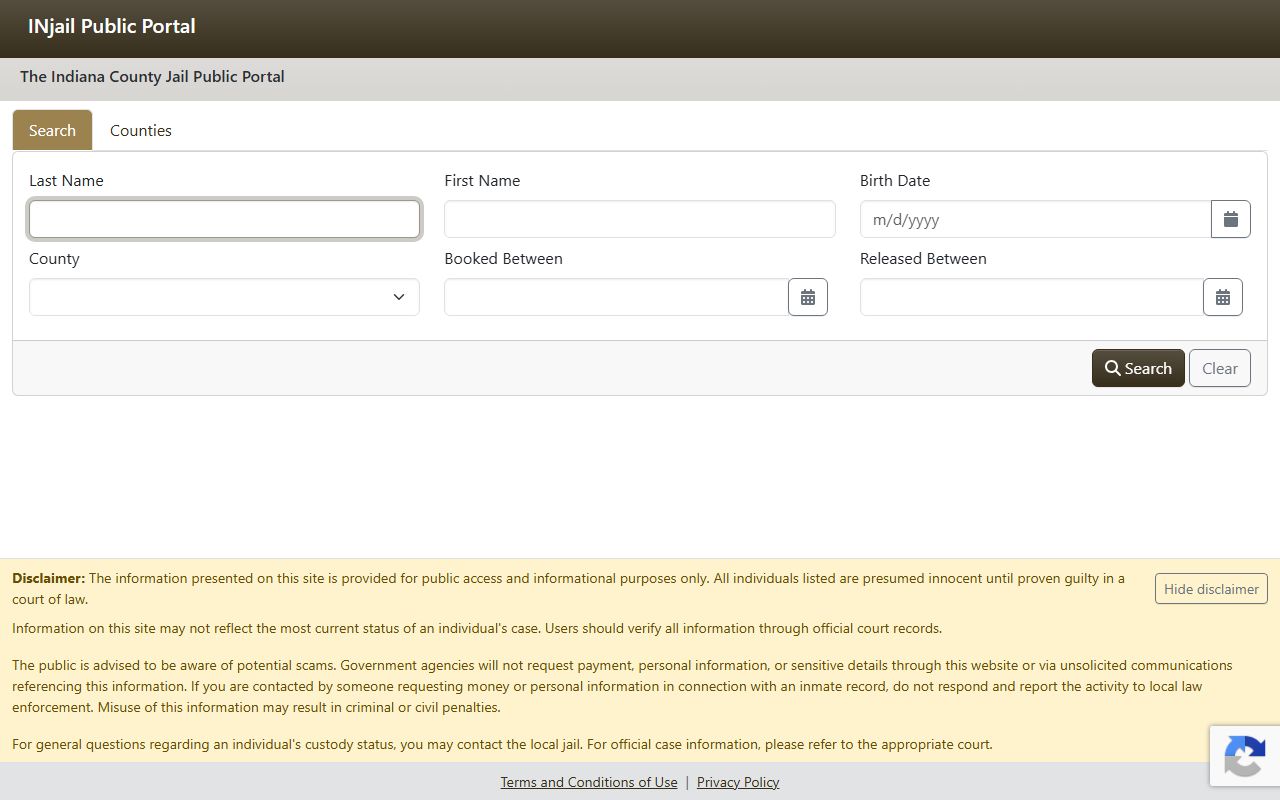
Use INjail to check booking status, then use MyCase or the clerk to verify filed Fountain County court charges and later court action.
Fountain County Charges After Arrest
Charges after arrest are formal allegations. A police report or jail booking may explain why a person was taken into custody, but the prosecutor decides what to file in court. Fountain County criminal cases can include charging information, probable-cause material that is public, appearances, bond orders, hearing notices, plea papers, disposition entries, sentencing orders, and financial obligations. A charge can be pending long before there is a conviction, dismissal, acquittal, or sentence.
| Charging document | Who uses it | How to read it |
|---|---|---|
| Complaint | Used to start some criminal or infraction matters and to set out the alleged conduct. | Look for the named defendant, alleged offense, date range, and court where the matter was filed. |
| Information | Filed by the prosecutor as the formal charging paper in many Indiana criminal cases. | Read the charge count, statute reference, offense level, and any amendments filed later. |
| Indictment | Grand-jury charging document used in some criminal matters. | Treat it as an accusation, not a finding of guilt, unless a later disposition says otherwise. |
The Fountain County Prosecutor's criminal and traffic cases page states that the office prosecutes felony and misdemeanor criminal cases, traffic infractions, non-traffic infractions, and juvenile matters under state law. That makes the prosecutor's filing the bridge between a law-enforcement arrest record and the court charge record. The clerk then maintains the court file for public access unless the record falls within an exclusion, sealing order, expungement order, juvenile restriction, or other access limit.
Fountain County Charge Status
Charge status changes as a case moves. A person may be booked on one description, charged in court under a more precise statute, and later see counts amended, reduced, dismissed, or resolved by plea or trial. MyCase docket entries are useful because they show the chronological case summary, hearing notices, orders, and final judgments when those items are public. If a document link is missing, the Indiana Judicial Branch says the document is not available online through MyCase and the clerk is the fallback for copy access.
| Status | What it means for a Fountain County charge |
|---|---|
| Pending | The charge has been filed or remains open, and no final outcome is shown for that count. |
| Amended | The prosecutor or court record has changed a charge description, count, level, or cited statute. |
| Reduced | The charge moved to a lower level or lesser offense, often through plea or amendment. |
| Dismissed | The charge ended without a conviction on that count, subject to the wording and order in the case. |
| Disposed | The case or count has reached a recorded outcome, such as plea, conviction, dismissal, or acquittal. |
Indiana public access rules matter here. Court records are public unless excluded from public access by rule, statute, or court order. The Indiana excluded records list identifies categories that may not appear in public search. The state also maintains a separate Protection Order Registry for protection-order searches by cause number or respondent or defendant name, since protected-person identifying details are not found in ordinary MyCase search.
The protection-order search is separate from MyCase. The manifest image from the Indiana Protection Order Registry information page shows the state-level route for that record type.
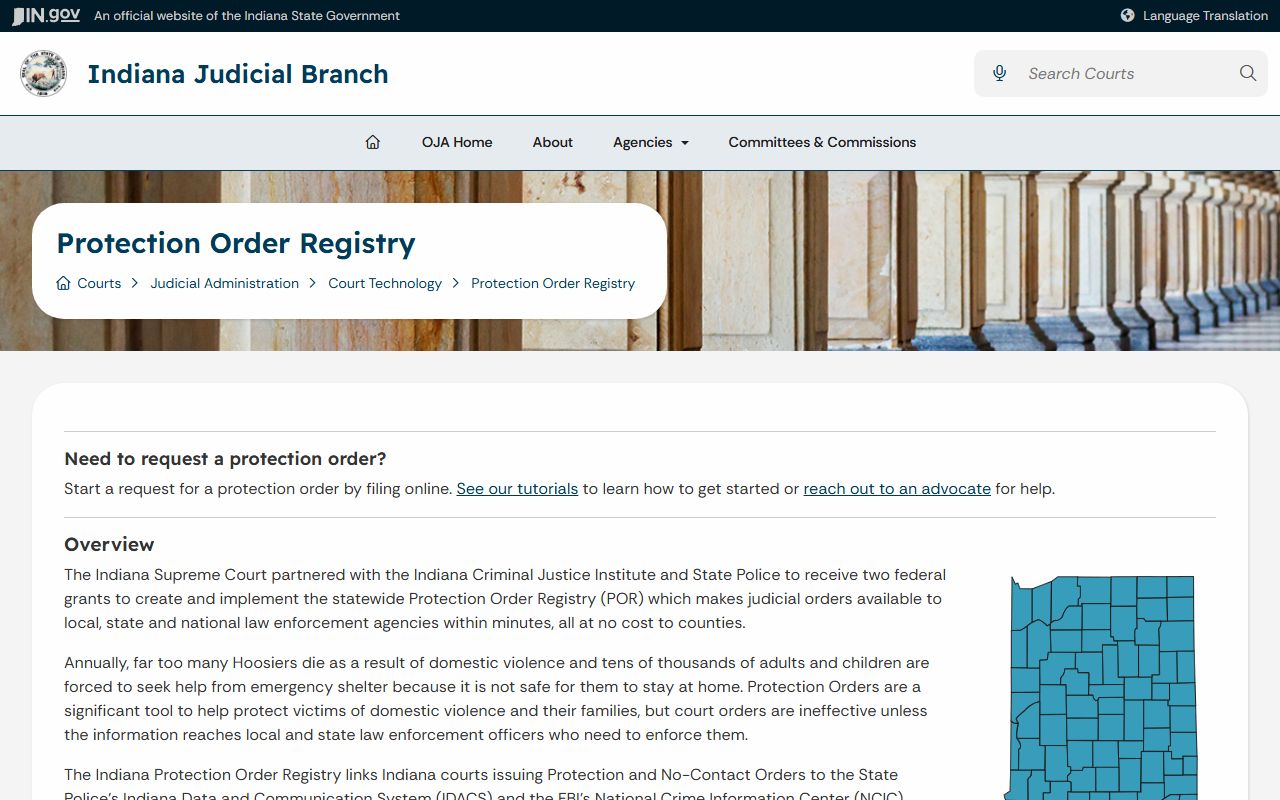
Protection-order records are not the same as arrest records, but the same defendant name or cause-number research may be relevant after an arrest.
Fountain County Charges vs Convictions
A charge is an accusation filed in court. A conviction is a final criminal judgment after a guilty plea, guilty finding, or verdict. This distinction is critical in Fountain County arrest records because booking charges and filed court charges can appear before any final outcome. A record that shows an arrest or pending charge should not be described as a conviction unless the court record shows a conviction or guilty disposition for that count.
| Point of comparison | Charge | Conviction |
|---|---|---|
| Record stage | Filed after arrest, citation, complaint, information, or indictment. | Recorded after plea, trial verdict, or other final finding of guilt. |
| What it proves | Shows an allegation by the State, not guilt. | Shows a criminal judgment on that count. |
| Where it appears | MyCase, jail booking data, prosecutor and clerk records, if public. | MyCase disposition entries, sentencing orders, clerk records, and later criminal history. |
| Why it can change | Counts can be amended, reduced, dismissed, or superseded. | May later be appealed, modified, sealed, or expunged if legally eligible. |
State custody and notification tools may also help separate local jail custody from later prison or victim-notification status. The Indiana Department of Correction incarcerated individual locator is for sentenced DOC custody, not pretrial Fountain County jail custody. Indiana SAVIN and VINE provide custody-status and notification services, but they do not replace a certified court charge record from the clerk.
For sentenced state-custody searches, the manifest includes the official Indiana DOC offender locator.
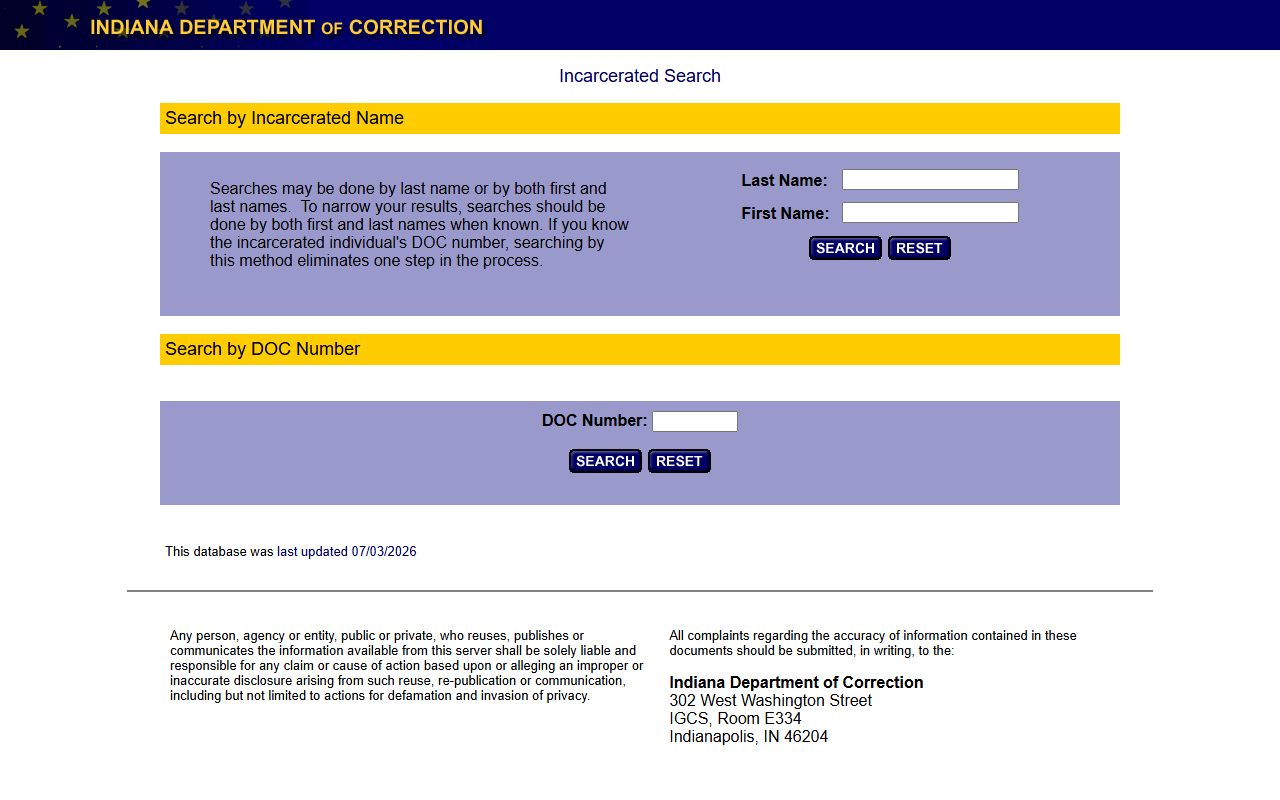
DOC records are most useful after a sentence results in state-prison custody, not when checking a new Fountain County booking.
Sealed Fountain County Charge Records
Indiana expungement and sealing rules can limit public access to eligible arrest, charge, and conviction records. The research points to Indiana Code Title 35, including the expungement chapter, as the official source. A person first has to identify the record type and result, such as an arrest or charge that did not lead to conviction, a misdemeanor conviction, a lower-level felony, a more serious felony, or another statutory class. The petition is filed in the proper court and the prosecutor may receive notice and object.
| Access result | Sealed or restricted | Expunged under Indiana law |
|---|---|---|
| Public visibility | Public access is limited by rule, order, or statutory exclusion. | Public search may be removed, marked, sealed, or restricted based on the expungement order. |
| Who may still see it | Courts, law enforcement, or authorized parties may retain limited access. | Access depends on the offense, order, and statute. |
| Common triggers | Juvenile, adoption, mental health, protected-person data, confidential addresses, or sealed filings. | Dismissal, acquittal, no true bill, vacated conviction, nonprosecution timing, or eligible conviction relief. |
Fountain County charge lookups should also account for juvenile and protection-order limits. Juvenile delinquency and child-welfare matters are more restricted than ordinary criminal cases. Adoption and mental-health records are not normal public case files. Personal identifiers such as Social Security numbers, financial account numbers, minor details, and confidential addresses are redacted or excluded. Note: A missing public result may mean no record, a misspelled search, an older record, or a record that is restricted.
Fountain County Custody Notifications
Custody notification tools are useful after an arrest because they help track whether a person remains in custody, has been released, or has moved into another custody system. They do not decide whether a court charge is valid. Indiana SAVIN and VINE are notification systems, while INjail is the county-jail public search channel and MyCase is the court case channel. For charge status, the court case and clerk remain the key sources.
The manifest includes the official Indiana SAVIN offender search used for custody notification.
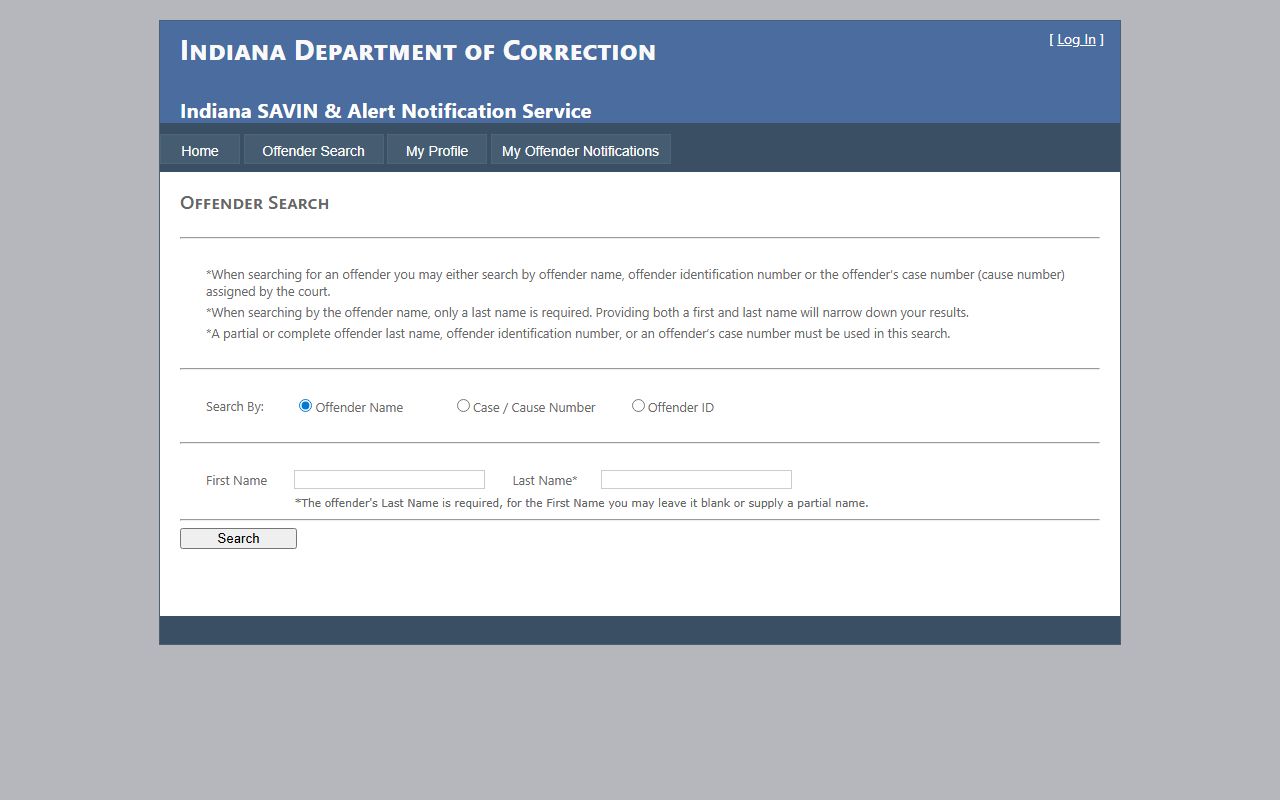
SAVIN can help monitor custody status, but Fountain County court charge status should be verified through MyCase or the Clerk of Courts.
The companion notification path is Indiana VINE, also included in the manifest images.
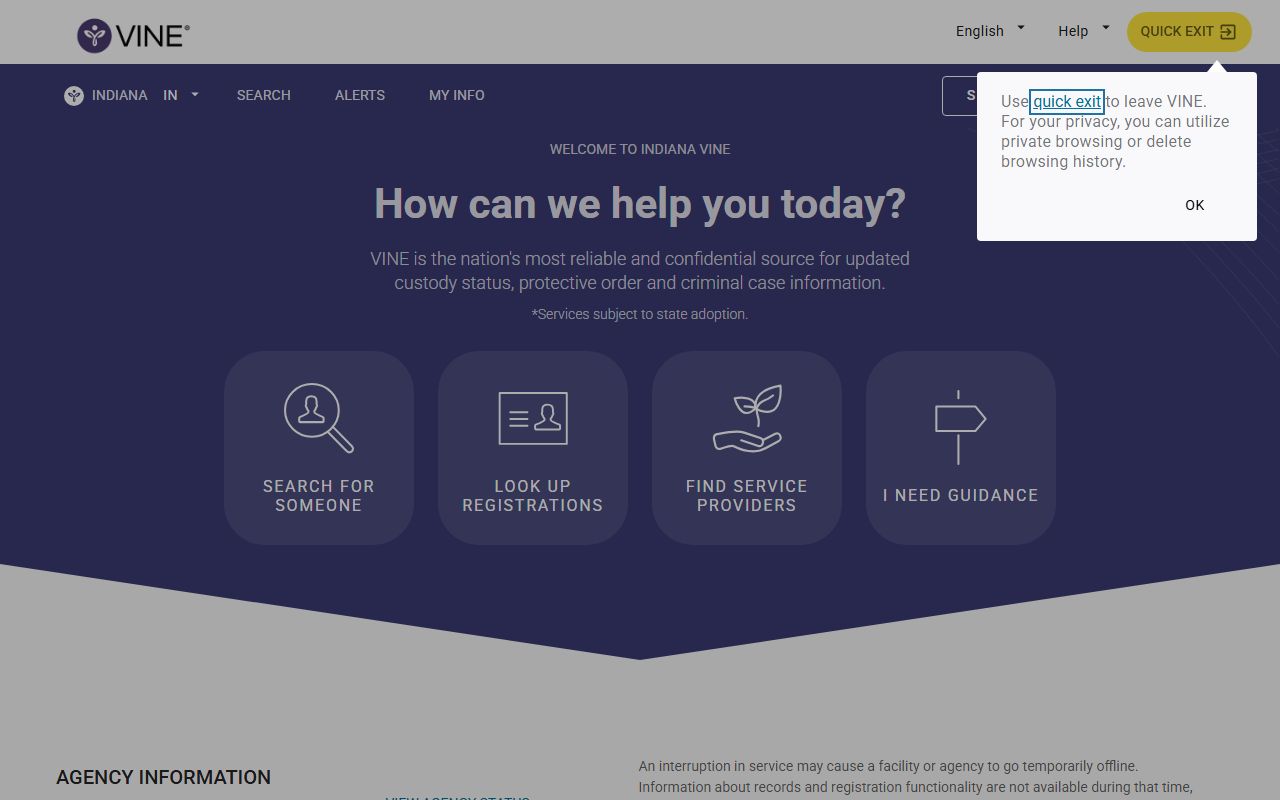
Use VINE for notification, not as a substitute for a filed Fountain County charge record or a certified copy from the clerk.
Fountain County Background Checks
Casual public lookup is not the same as a regulated background check. Public MyCase results, INjail booking entries, SAVIN notifications, and VINE status can help a person understand where a case or custody event stands, but they may be incomplete, out of date, or limited by access rules. The official MyCase help warns that electronic information is not the official court record and can contain errors or omissions. Official records must come from the court maintaining the record.
Important: Public lookup pages are not consumer reports and should not be used for FCRA-regulated decisions.
For official copies, contact the Fountain County Clerk of Courts at the courthouse. For jail custody, bond, or release questions, contact the Fountain County Sheriff's Office. For prosecution questions, the Fountain County Prosecutor's Office is located at the county courthouse and lists weekday business hours in the research. Public defender contact was not located as a separate county office, so indigent-defense requests should be handled through the court in the criminal case.